Bearer of a fine stroke and loving gaze, Josias Marinho Casadecaba converses with the multiple forms of life in the Black Amazon
Josias Marinho Casadecaba is a visual artist, illustrator, writer, researcher, and professor born in the quilombola community of Forte Príncipe da Beira, on the banks of the Guaporé River, in Rondônia. His work constructs visual narratives marked by the appreciation of Afro-Brazilian cultures, memory, orality, Black childhoods, and Amazonian territories.
Transiting between illustration, children’s and young adult literature, academic research, and education, Josias is part of a generation of artists who broaden the imaginaries about the Black Amazon, articulating ancestry, belonging, and identity in creations intended for diverse audiences.
In his work, the biodiversity of the Amazons is manifested primarily in the relationships between water, fauna, flora, people, words, and imagination. Nature articulates ways of life and forms of knowledge produced by those who live in the region.
In an interview with the Concertation, Josias revisited his relationship with the Guaporé River, the Black presence in the Amazons, his choice of illustrated books and academic research, and the ways in which he transforms experiences and ways of naming the world into visual language.
The Guaporé River region in Rondônia is a permanent source of memory and inspiration
The Forte Príncipe da Beira community, where Josias was born, is located next to a fortress built on the banks of the Guaporé River in the 18th century, on the labor of enslaved Black and Indigenous people. To this day, the region is characterized by the coexistence of quilombola, indigenous, and riverside populations.
The artist’s emotional connection to the territory where he was raised kindled the river as an important source of inspiration. It is the route along which traditions travel, merging different communities and their cultures.
It is from the Guaporé that stories, cultural practices, words, and ways of life emerge, permeating Josias’s work, while his quilombola origins inspire a keen eye on ancestry, shared memory, community, and different ways of creating knowledge. “The nomenclature, the way of being, and the stories surrounding all of this become images for me,” he says.
His illustrations affirm the presence of quilombos in the construction of imaginaries about the territory
Valuing this cultural heritage is one of the main axes of Josias’s art. In his work, he frequently constructs positive, affectionate, and complex representations of Black Amazonians, especially children, who play, imagine, discover, observe, and take center stage in the narratives.
This concern also extends to representations of the Amazons. The artist notes that the region is often reduced to the forest, the rivers, or a cultural repertoire seen from the outside, which seeks to classify the region’s ways of life solely from the point of view of “deficiency”, lack of sociability, lack of protagonism, while the historical presence of its populations remains largely unrecognized.
Often, with only a notebook, a pencil, and a black ink pen always in hand, Josias draws fragments of the environment that challenge this framing. Thus, he presents us with an Amazon that is seen from within, and it is also Black, Quilombola, riverside, Indigenous, and borderland, formed by subjects who build their own knowledge, languages, and ways of relating to the territory every day.
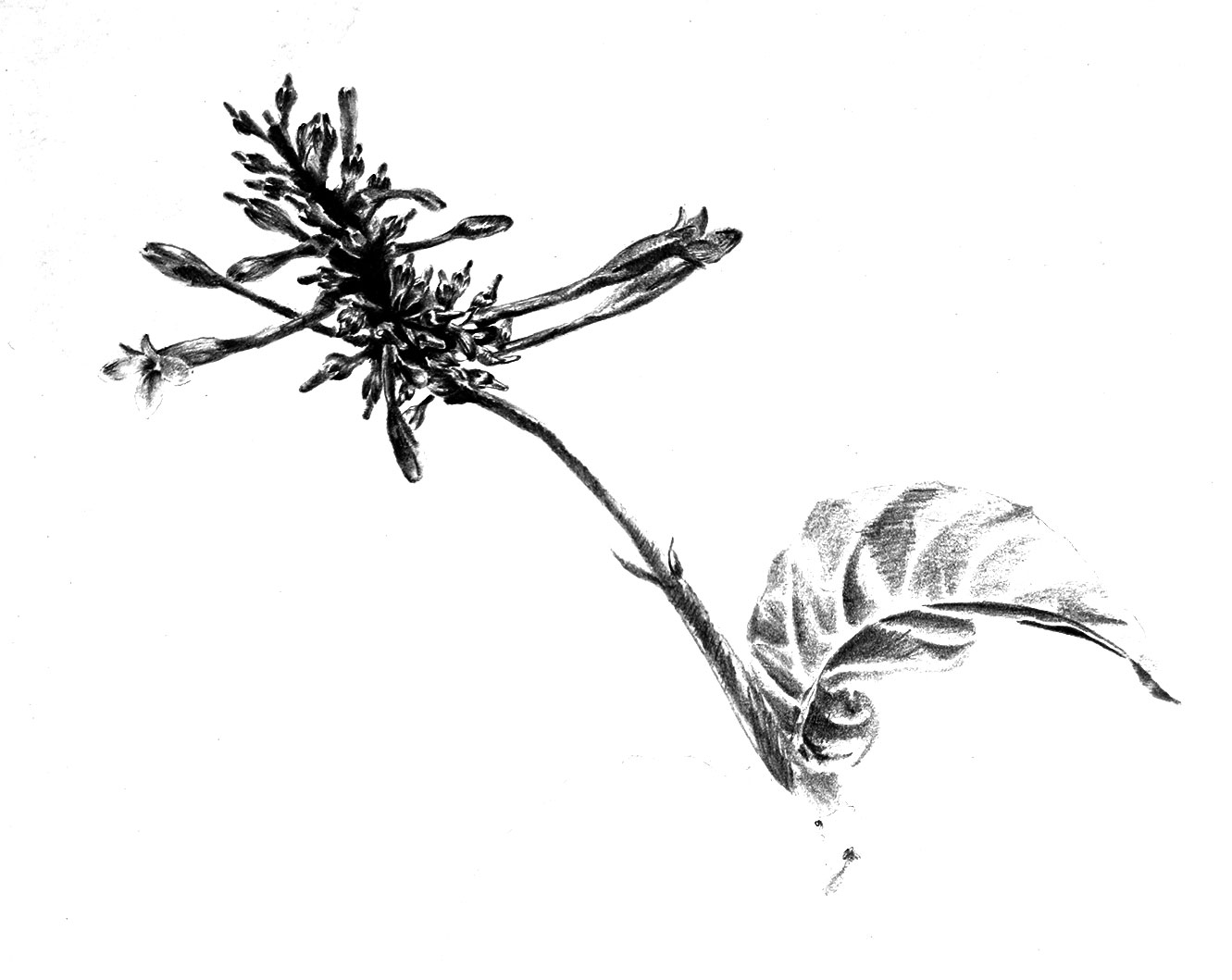
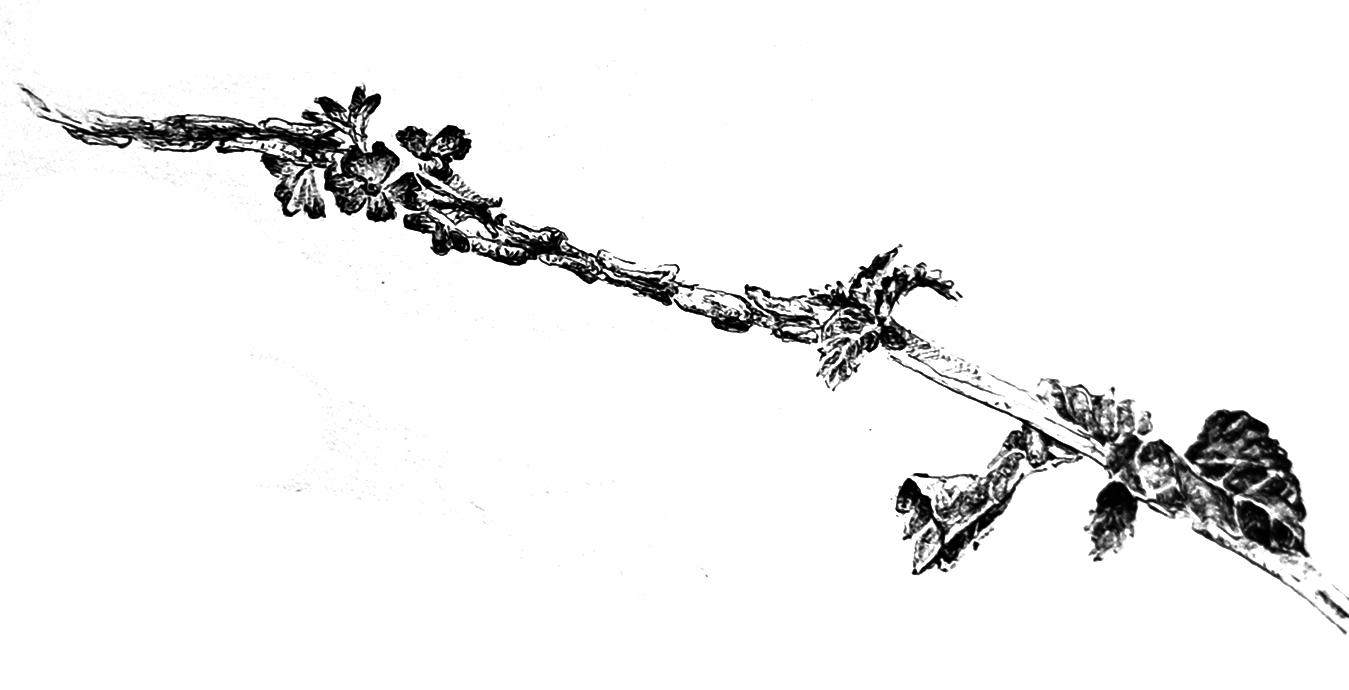
In a trajectory marked by constant moving, Josias expanded his name to signal his Amazonian origin
After spending his childhood and adolescence in Rondônia, between Forte Príncipe da Beira, Costa Marques, and Guajará-Mirim, Josias moved to Belo Horizonte, Minas Gerais, where he remained for 22 years. Although he intended to study Literature, his drawing talent and experience soon brought him closer to the visual arts.
After being noticed for producing portraits to supplement his income, the artist was encouraged to apply to the School of Fine Arts at the Federal University of Minas Gerais (UFMG), an opportunity he had never considered.
He thus graduated in Visual Arts and built a career that would also encompass Brazilian History, Literature, Education, and research on Illustrated Books. Upon returning to the North in 2016, he settled in Boa Vista (RR), where he currently teaches Visual Arts at the Laboratory School of the Federal University of Roraima (UFRR). He also assumed the role of President of the Administrative and Editorial Board of the university’s publishing house.
It was also during his years in Minas Gerais that artistic name Casadecaba. emerged. Expression “casa de caba”, derived from Nheengatu, is used in the North in reference to the house of cabas or wasps. Upon realizing that the term was not understood outside the region, Josias decided to adopt it as an imprint of belonging.
Moving between such different territories has made the connection to his own origins even more conscious. “This creation was a gift to myself, a gift I use as my artistic surname, to maintain ties to the North,” he explains. “I created this bond from the moment I stepped out of it,” he emphasizes.
Casadecaba became part of Josias’ public identity. The name raises questions and opens up space to explain a regional word and the cultural universe to which it belongs. “It works very well for this narrative, for the cause I advocate, for who I am and for who I intend to be,” he concludes.
For Casadecaba, the richness of Amazonian biodiversity lies in the relationships of living beings with each other and with the environment
Josias says that his origins also inspire him to talk about Amazonian biodiversity. The first image that is related to this theme evoked by the artist is that of the Guaporé River: an environment in motion, traversed by different species and the life of the communities around it.
This understanding of territory permeates his work, as in “Bateção,” a book inspired by a phenomenon observed in the Amazon rivers. When fishing, cormorants dive in search of food; the fish jump out of the water in panic and often fall into canoes already positioned by fishermen to take advantage of the phenomenon. In the quilombo region, this collective movement on the water surface is called “bateção”.
The scene brings together birds, fish, insects, forest, woods, river, and people. In the book, in addition to illustrating different species, Josias’ visual narrative shows how they mutually affect each other. Biodiversity emerges from the interactions, movements, and shared rhythms within that environment.
The scenario also reveals a type of knowledge that cannot be produced remotely. To recognize the “bateção”, one must observe the water, understand the behavior of the animals, identify the river’s movements, and accumulate experiences passed down from generation to generation.
In Casadecaba’s work, this knowledge is integrated into the very construction of the territory. Nature and culture are not separate areas. People learn from natural cycles, create words to name phenomena, and transform observations into stories, practices, and ultimately, memories.
His work thus approaches a broader understanding of biodiversity, which links the conservation of ecosystems to the continuity of knowledge, cultures, and ways of life built upon them.
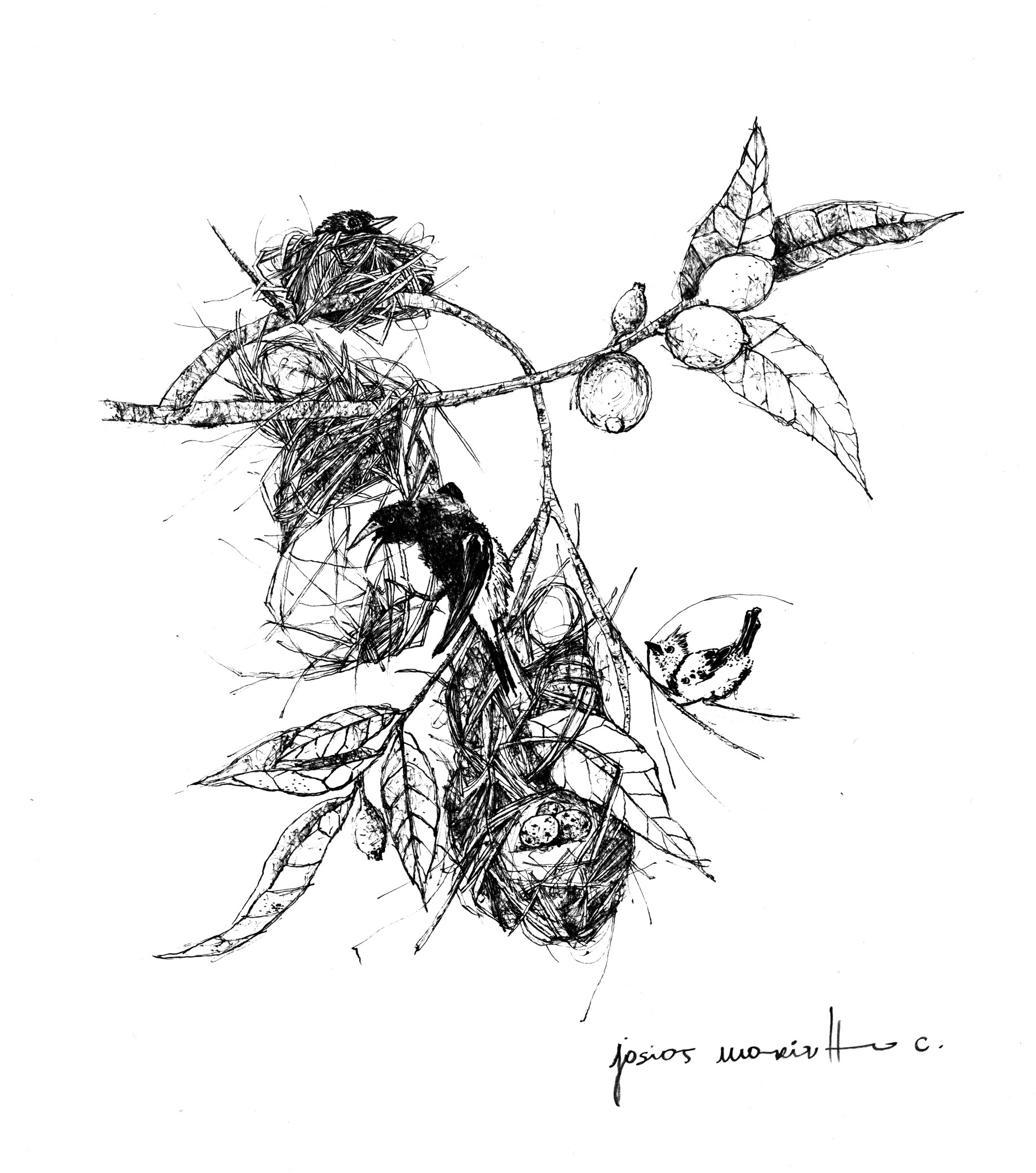
In the illustrated book, Josias finds a space to organize this complexity
For him, illustration is not a subordinate complement to the text. The image produces its own meanings, establishes rhythms, creates silences, and guides readers down paths that words alone could not reach. “Neither paper nor a single screen could capture the narrative complexity or the time frame that we can build in a book,” he explains.
Page layout allows for the articulation of symbols, colors, scene changes, and different temporal layers. Text and image can converse, diverge, or expand upon each other, an important freedom for a production sustained by observation, memory, and storytelling.
The book also allows narratives transmitted orally to find new forms of continuity. Family stories, regional expressions, and childhood memories begin to circulate among other audiences and generations.
Art, teaching and research are inseparable dimensions of his life and work
His work also combines artistic creation and education, awarding him the role of “artist-teacher”. Artistic research blends with the paths the artist proposes in the classroom, while teaching generates questions and references that nourish his work. “It’s a way for me to stay active and to combine these two activities; one feeding the other,” he explains.
His academic work includes teaching visual arts, teacher training, illustration, ethnic-racial relations, and Afro-Brazilian cultures. In these dimensions, Josias understands art as a way of producing knowledge, not just representing known content.
This principle also draws his focus to the Amazons. For him, image can reveal invisible relationships, restore centrality to historically erased subjects, and circulate knowledge constituted in the territories.
Josias’ work reveals multiple ways of knowing and narrating the Amazons
In Josias Marinho Casadecaba’s production, everything is interconnected. The richness of Amazonian life’s diversity is sustained by the relationships developed with the territories, the knowledge transmitted between generations, and the cultural diversity of the peoples who inhabit them.
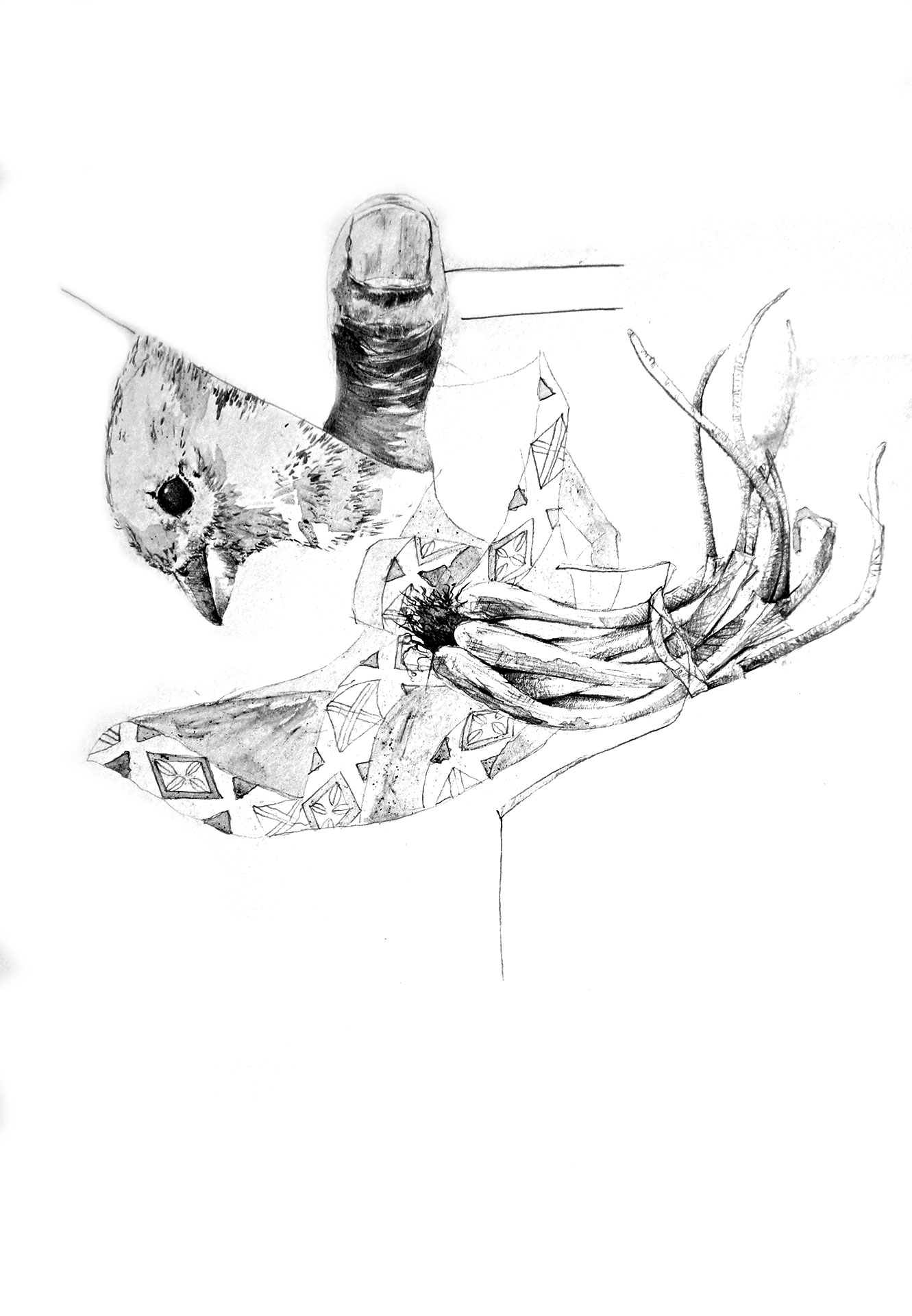
By bringing together art, education, literature, and research, Josias expands the imaginary about the Amazons and contributes to placing Black and Quilombola experiences at the center stage of the narratives.
Now, his work also inspires the visual identity of the Concertation’s digital channels and helps to broaden the dialogue on biodiversity based on the cultures, knowledge, and perspectives produced in the Amazonian territories.