Artist from Manaus transforms listening, research, and relationships that cross the Amazon into a visual language built to follow Route 26-30
Transforming into images an agenda that brings together different territories, knowledge, and perspectives on the Amazon was the challenge undertaken by the Manaus-born artist Hadna Abreu when creating watercolors for the five main themes of Route 26-30. Throughout the process, she leaned on her expertise to make visible relationships and connections that are not always depicted in maps, indicators, or proposals.
This way of looking at things is connected to Hadna’s own trajectory. Visual artist, illustrator, researcher and curator, graduated in Visual Arts from the Federal University of Amazonas (UFAM), she creates works that combine art, science, nature and technology. Using different techniques and languages, her research focuses on observing organisms, relationships, and phenomena that often go unnoticed.
An initiative of the Concertation network, Route 26-30 is the result of a collective listening process, with themed sessions with experts, consultations with network members, plenary sessions, and contributions from different stakeholders. The publication, scheduled for November, brings together pathways and solutions for the Amazon region in five key areas: Forests, Energy Security, Urban Sanitation, Food and Biodiversity.
To follow along this path, Hadna created an artistic language in which listening, research, and sensitivity come together. A work that engages with her career path and, at the same time, broadens her field of research.
From childhood curiosity to forest exploration
The sensitivity that guides Hadna’s work has come a long way, from her childhood memories in Manaus (AM), her grandparents’ backyards, the plants cultivated by her family, and from her early curiosity about insects, leaves, and other small forms of life. These familiar references were incorporated into her early artistic investigations and remain in her creative process: an interest in detail and in what one can find by observing things with a keen eye.
Personal identification with the Amazon, however, was not immediate. Although born and raised in Amazonas’s capital, Hadna says it took her some time to establish an artistic relationship with the region. This connection arose from trips inland within her state and, later, from contact with researchers and scientific investigation, especially regarding Amazonian fungi.
Her engagement with science transformed how she viewed these elements. What once sparked her interest in form, delicacy, or sentiment is now being investigated in the light of scientific knowledge. Research, expeditions, and projects, such as those developed along with the Socio-Environmental Institute (ISA), have contributed to expanding her knowledge about the forest. One of the primary examples is a publication about Yanomami fungi, which later received the Jabuti Award.
It was during this process that detail took on an even greater significance in her work. By observing fungi, insects, roots, and other life forms, Hadna came to understand the forest as more than just vast landscapes, but rather as a system made up of small parts that connect and support the entirety.
Art as another form of knowledge
These experiences also helped shape her understanding of art as a way of knowing the world. For the artist, observing and perceiving are also ways of producing knowledge, which are not limited to what can be read, written, said, or measured. Experience, perception, and feeling are also part of this process. “It is about observing and letting this observation guide you,” she summarizes.
Years later, this way of looking at things found a breeding ground in Hadna’s relationship with the Concertation.
From a detailed view of the forest to a broader view of the Amazon
Since 2021, Hadna has participated in various Concertation initiatives. Among these collaborations are the illustrations for collection “Propostas para as Amazônias” [Proposals for the Amazon], the special edition of game Dixit Amazônias, [Dixit Amazon] among other projects. The artist is also part of the Atlas Cultural das Amazônias [Cultural Atlas of the Amazon], a collaborative platform that maps and gives visibility to artists, producers and cultural leaders of the area.
Over time, Hadna says that the discussions promoted by the network broadened her own understanding of the Amazon. While her initial focus was primarily on the forest, biodiversity, and the elements she investigated closely, the Concertation debates also brought her closer to topics such as infrastructure, economy, and energy, as well as the relationships between these different dimensions.
“I used to wear a magnifying glass,” explains the researcher. The Concertation, she says, gave her “binoculars,” that is, the possibility of keeping a keen eye on detail without losing sight of a broader perspective on the territories and challenges of the Amazon.
Listening and research guided the creation of the watercolors for Route 26-30
Hadna began developing the watercolors for the five themes of Route 26-30 during the initiative’s themed meetings. Some themes were closely related to subjects that already permeated her artistic research. Others demanded a deeper exploration of less familiar universes.
In the process, she took notes, drew certain elements, looked for references, read new materials, and continued her research after the meetings. The challenge was to translate the complexity of the debates into a visual language capable of integrating their different dimensions, without resorting to literal representations.
Water, air, roots and mycelia make the connections of the Amazon visible
The artistic concept proposed by the Concertation was based on the premise that numerous elements cross the Amazonian territories without adhering to strict borders, such as water, air, and the roots of vegetation.
The watercolor technique itself engages with this idea. Because water is a fundamental element, it allows colors to meet, overlap, and produce new forms. This movement also serves as a metaphor for the Concertation, in which different voices, knowledge, experiences, and perspectives are strengthened by establishing connections with one another.
Hadna applied this premise to her visual language. She started with the colors associated with the Route 26-30 identity and brought them closer to the tones of nature, incorporating stains and splashes to create more fluid images.
Another element runs through her different works: thin lines that resemble roots, rays, or branches. For Hadna, they are especially reminiscent of mycelia, networks formed by fungi, a reference that was already part of her artistic research.
It is from this encounter between the conceptual proposal of the Concertation and Hadna’s artistic repertoire that the language of Route 26-30 takes shape. Images suggest relationships and invite us to perceive what is not always immediately visible.
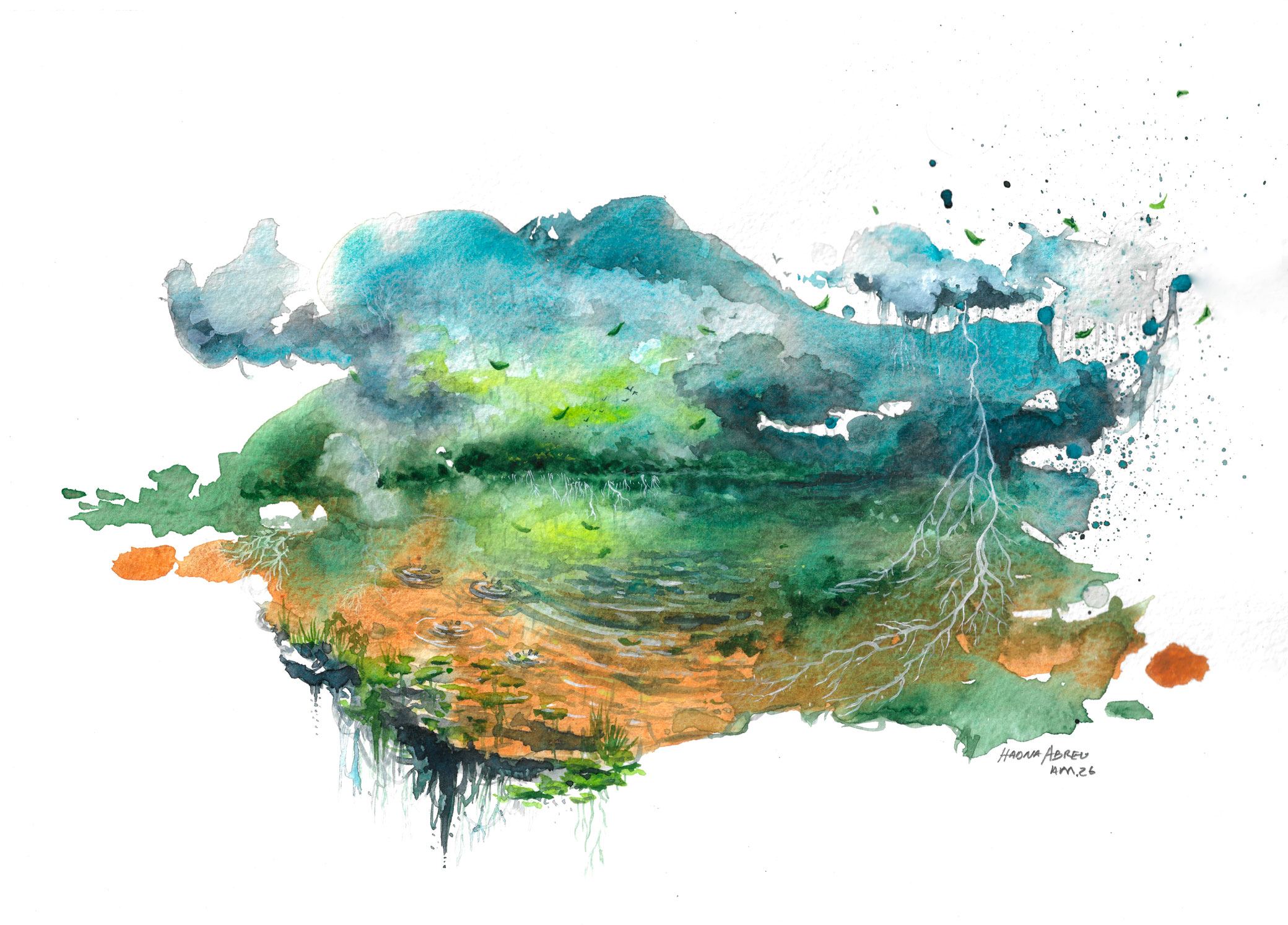
Watercolor painting “Ar e Água” [Air and Water] illustrates this idea. It portrays a less literal and freer image, capable of making the observer “travel” through the composition, which brings together elements related to water, climate, and nature. The colors of the visual identity of Route 26-30 and the Concertation are blended with natural tones, and splashes of watercolor are associated with water and movement. In the artist’s words, the goal is primarily to convey a “flow of ideas”.
This same language takes on new forms before each of the five main themes, where Hadna starts from collective discussions to creating images in which nature, people, knowledge, and territory appear continuously connected.
Forests
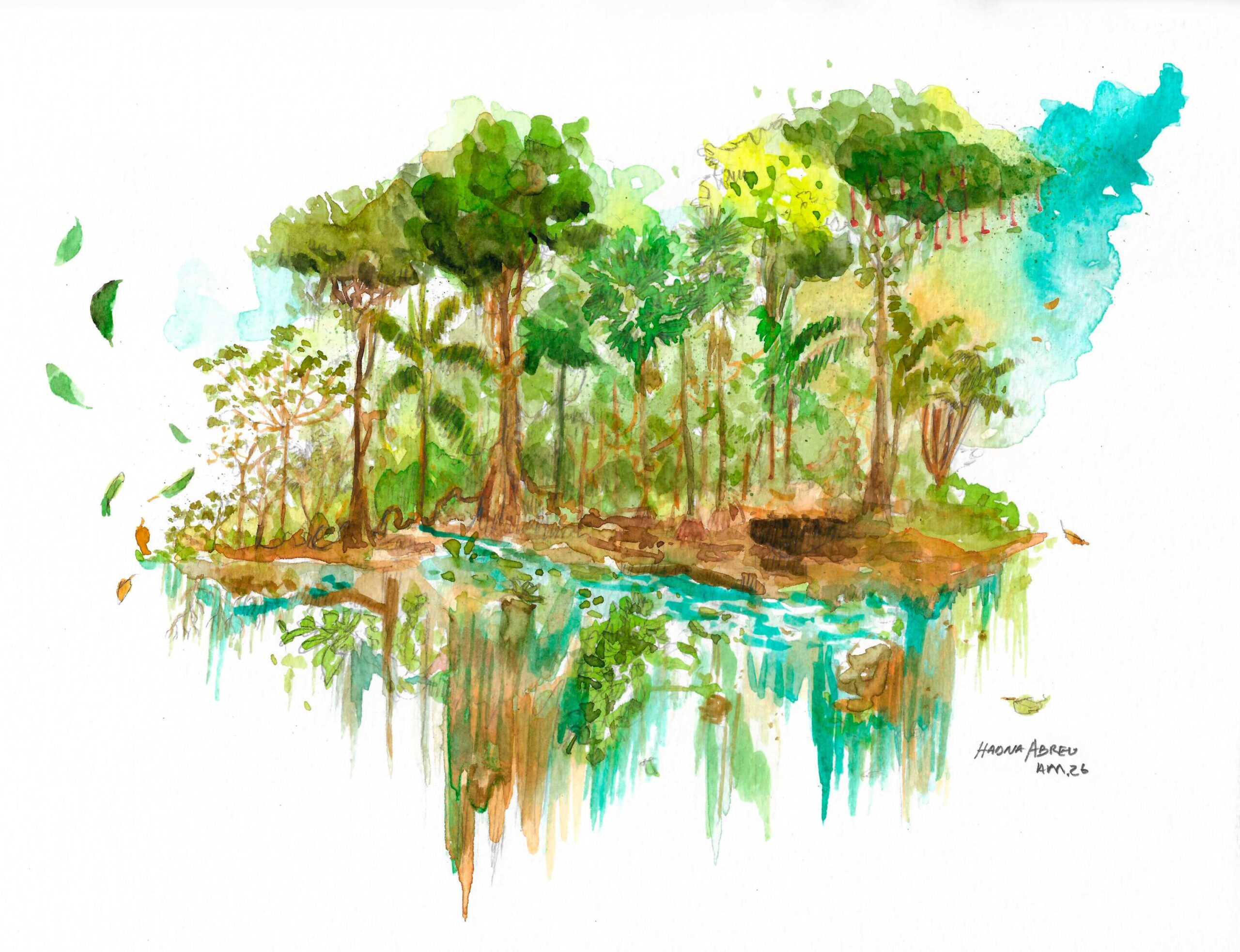
In this work, Hadna presents restoration as a possibility for recovering degraded forests. A pioneer species emerges from the degraded soil and, little by little, birds, insects and other animals help to restore life. For the artist, this first movement paves the way for the “return of the collective”.
Energy Security
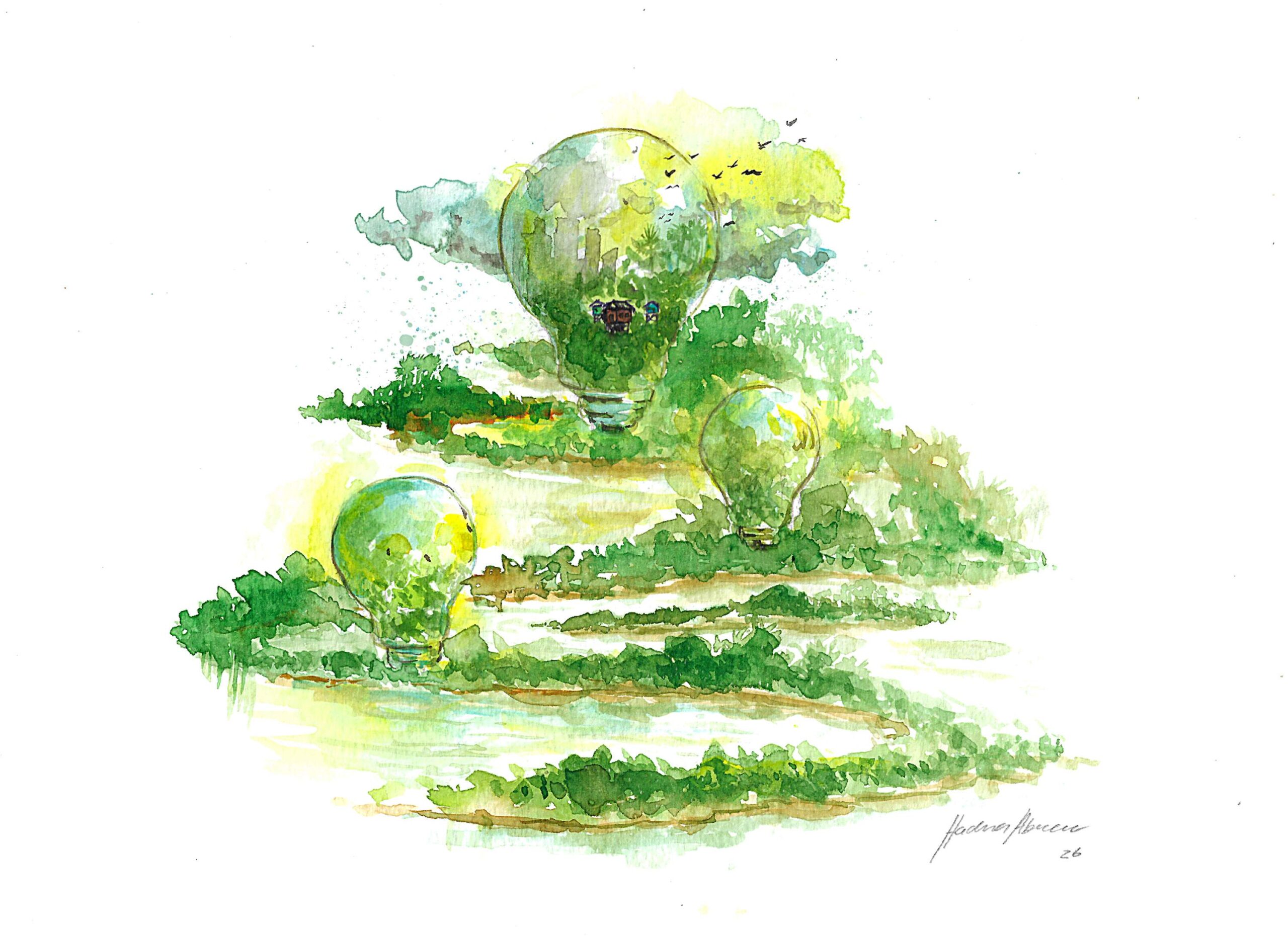
In this watercolor painting about energy security, the forest appears as a territory for research and innovation, from which crystal-clear bulbs emerge amidst the vegetation and water. This piece of art also evokes alternatives such as energy generation from biomass and proposes imagining solutions capable of benefiting cities, indigenous peoples, and riverside communities.
Urban Sanitation
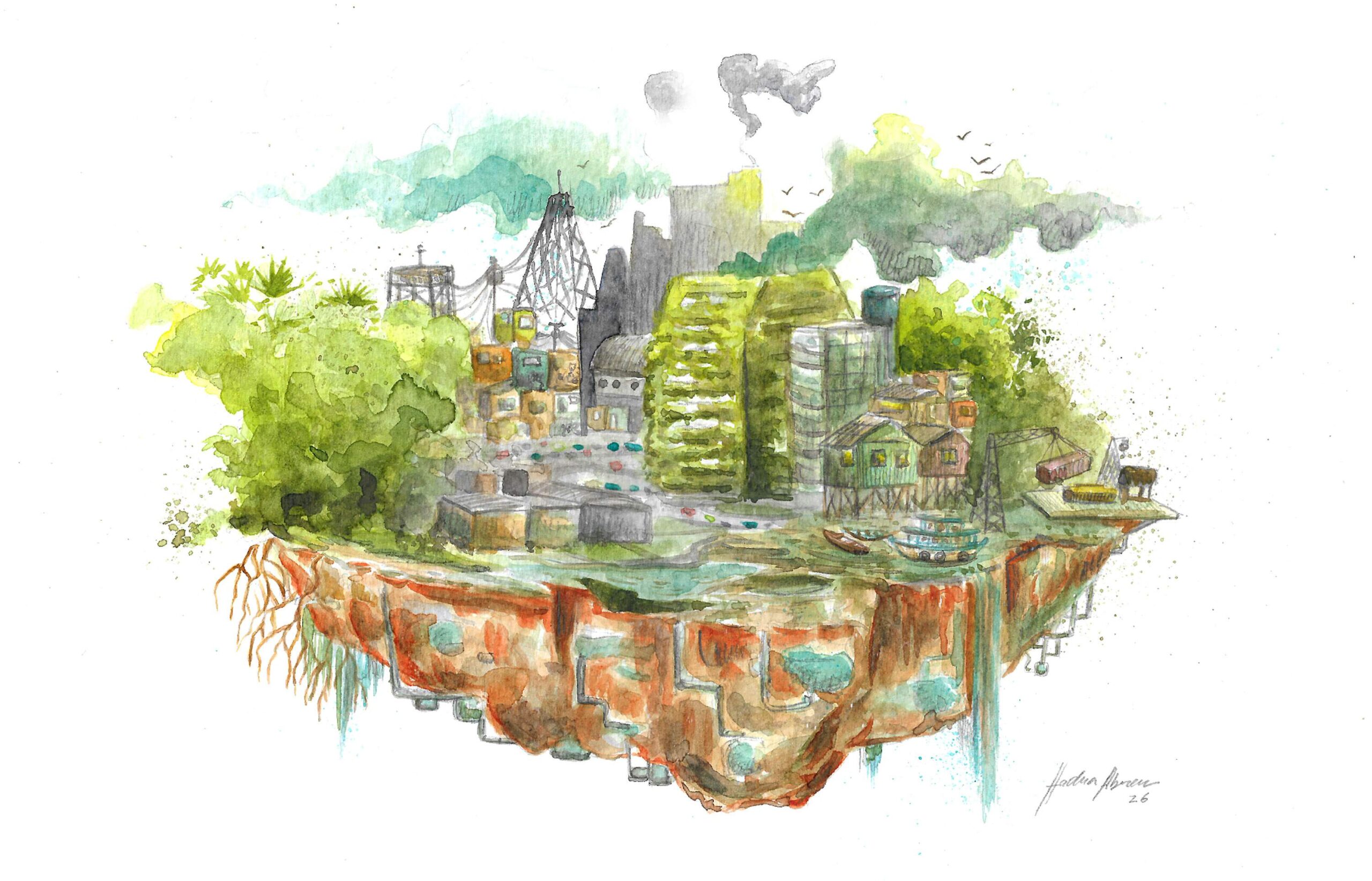
The tension between city and forest are the backdrop for this watercolor painting about urban sanitation. Hadna represents a city that is almost floating in the air. On the surface, there are buildings, movement, and expansion; below are the soil, water flows, buried rivers, groundwater, and memories of the territory. The image highlights urgent needs such as access to clean water and the restoration of rivers and streams, while it also invites us to imagine cities that do not separate themselves from the forest, but grow alongside it.
Food
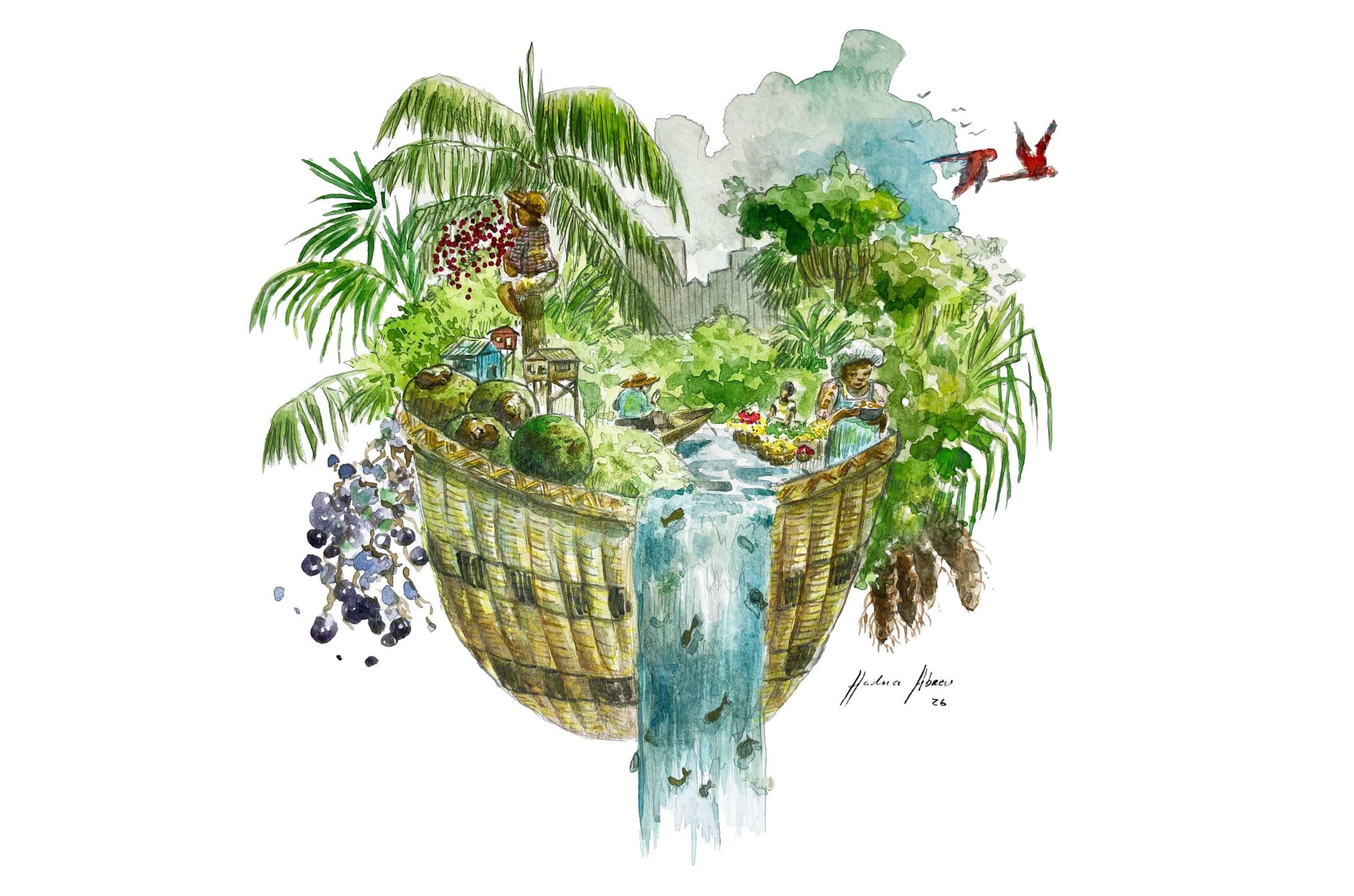
To address the topic, Hadna starts from the premise that food brings together territories, ways of life, knowledge, and relationships. At the center of the watercolor is a Yanomami basket containing açaí berries, roots and other fruits, stilt houses, fish, a canoe, and people. For the artist, it represents food intelligence that combines science, ancestry, and knowledge of nature’s cycles, present among indigenous peoples, riverside communities, and family farmers.
Biodiversity
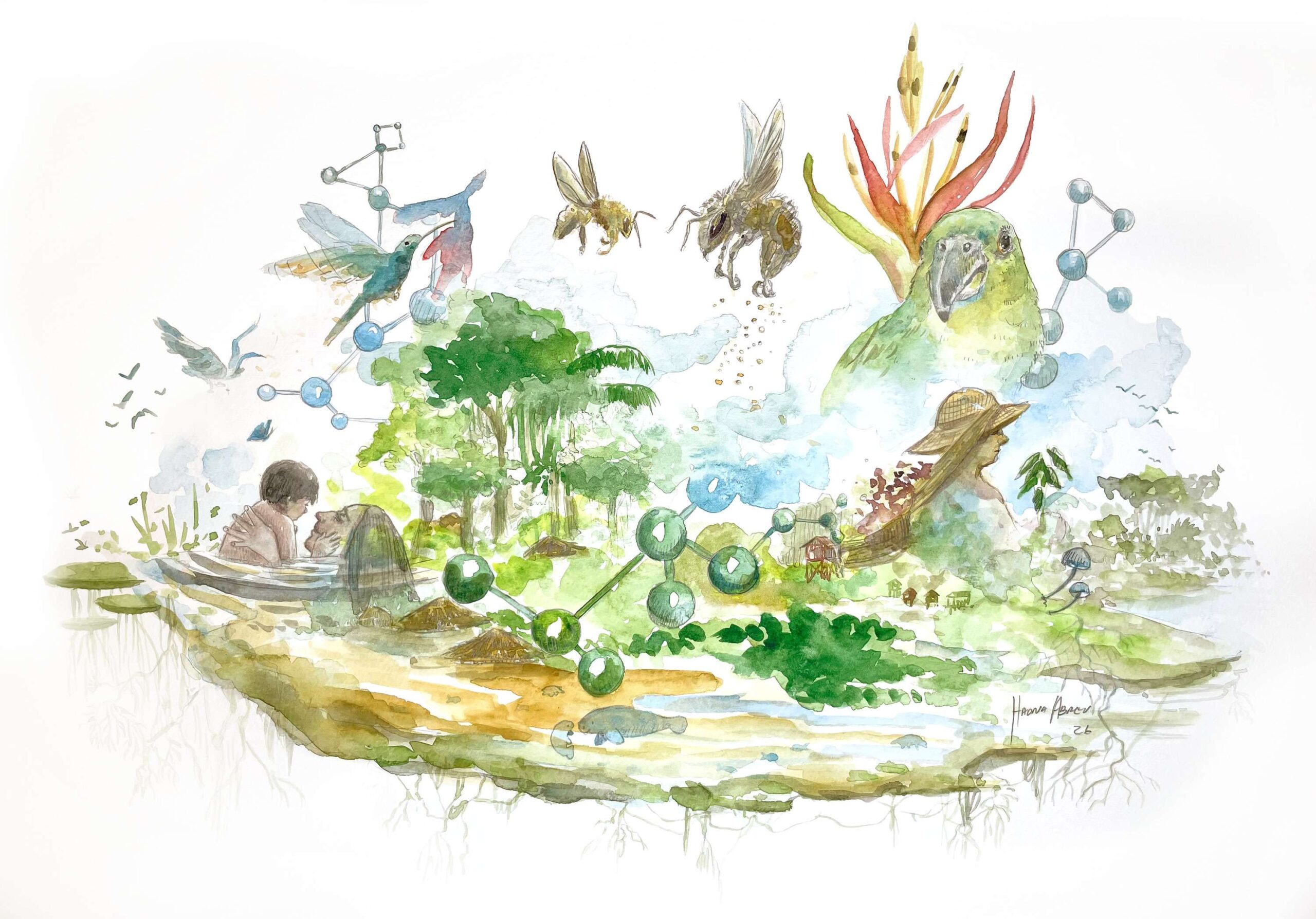
In her watercolor painting about biodiversity, Hadna shifts the focus from vast landscapes in order to highlight insects, fungi, and small birds—almost invisible beings that “silently sustain life,” she says. The composition juxtaposes roots and rivers with scenes such as a mother bathing her child and a manatee with its calf, emphasizing the human and non-human relationships in the forest.
The creation of watercolors also broadens the artist’s perspective
By transforming the debates surrounding Route 26-30 into images, Hadna also saw her own understanding of the Amazon transform. The process reinforced the need to observe the region in an integrated manner, connecting forests and biodiversity to people, cities, infrastructure, energy, the economy, and other elements that sustain life in the territories.
The experience also points to new paths for her production. The artist aims to bring her art even closer to the social issues and challenges faced in the Amazon, proposing reflections, questions, and possibilities. Thus, the watercolors created for the Route do not end this journey: they expand an artistic investigation that remains attentive both to the almost invisible details of the forest and to the broader relationships that permeate the region.